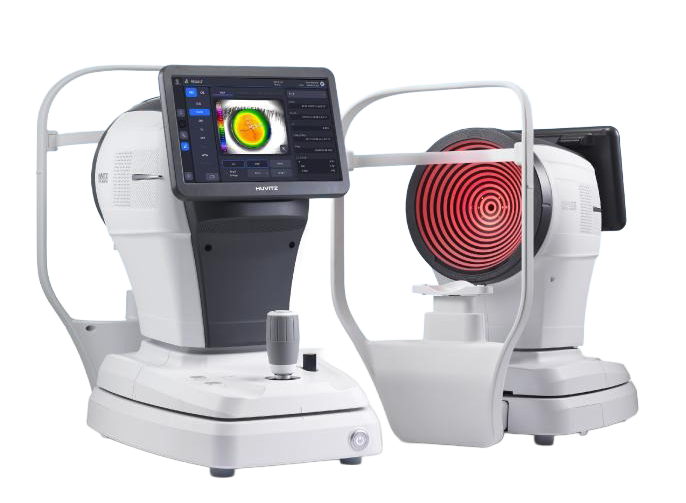
Huvitz Oracle HRKT-1 All-in-One Visual Analysis System
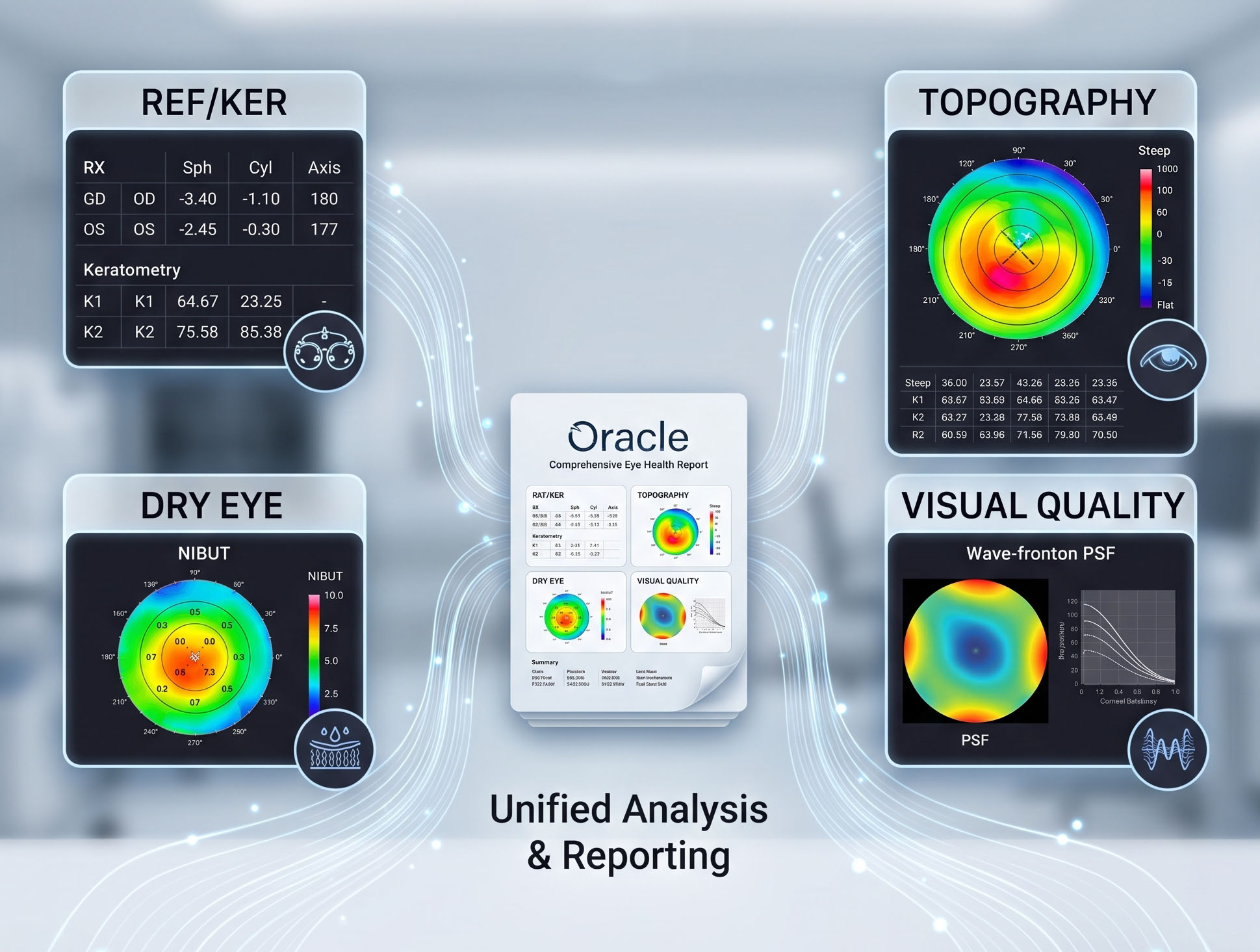
Some vision complaints are more complex than a refractive error alone. The Huvitz Oracle, brings refraction and keratometry, corneal topography, dry eye testing, and advanced visual quality analysis together in one powerful platform, helping practices connect the data and uncover what may be affecting a patient’s vision.
With multiple workup capabilities built into a single device, the Huvitz Oracle gives eye care teams a more efficient way to evaluate refractive status, corneal shape, the ocular surface, and optical quality without moving patients between separate instruments. The result is a smoother workflow, a more complete clinical picture, and clearer conversations with patients.
Why Choose the Huvitz Oracle?
The Huvitz Oracle combines the data that practices use every day with deeper analysis that can help explain glare, halos, fluctuating vision, night-driving complaints, irregular astigmatism, dry eye symptoms, and other concerns that may not be fully understood through standard refraction alone.
Four Connected Layers of Analysis: Review refraction and keratometry, topography, dry eye findings, and crystalline lens issues in a single examination environment.
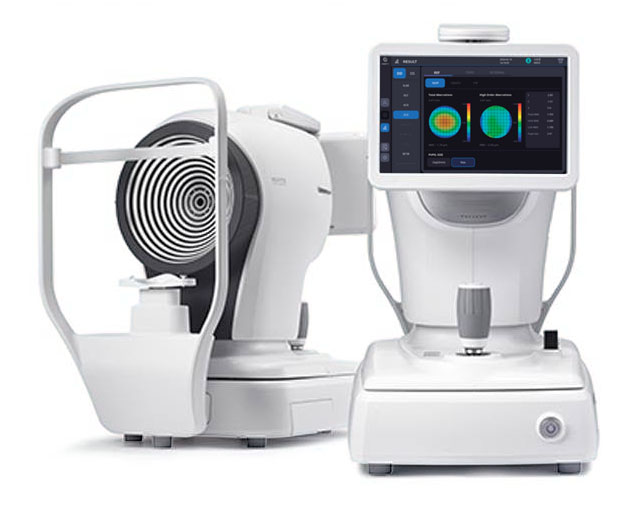
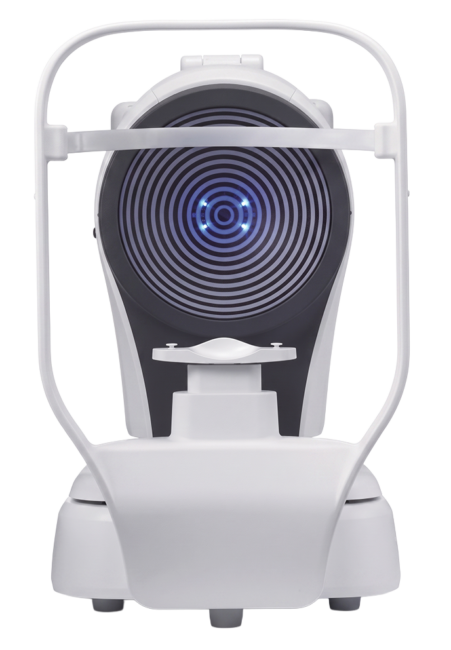
High-Definition Corneal Topography: A 24-ring Placido system analyzes more than 100,000 points to create detailed maps of the anterior corneal surface.
Patient-Friendly Visual Evidence: Maps, simulated images, numerical values, and structured reports help translate complex findings into explanations patients can see and understand.
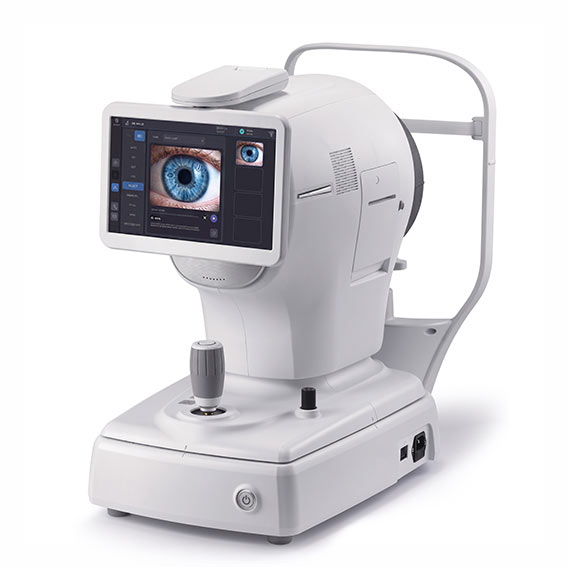
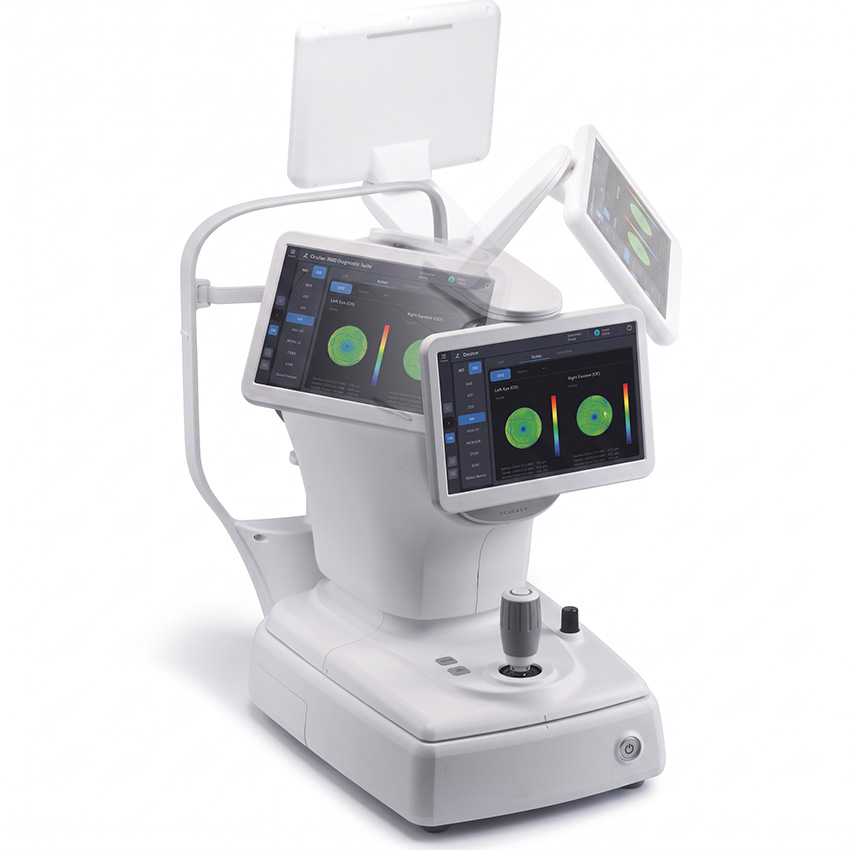
One-Station Workflow: A built-in PC and 10.1-inch touch display support measurement, analysis, and report review on the device – not requiring a separate computer for operation, saving valuable space.
One Device. One Workflow.
A More Complete Answer.
When refraction, corneal, ocular surface, and visual quality findings live on different devices, clinicians must connect the pieces during the exam. The Huvitz Oracle is designed to bring those pieces together for you automatically.
That integrated approach can help practices standardize workups, reduce unnecessary patient movement, streamline the handoff from technician to doctor, and focus consultations on factors that may contribute to a patient’s symptoms.
Go Beyond Standard Refraction
The Huvitz Oracle establishes the refractive and keratometric baseline while expanding the conversation beyond sphere and cylinder. Wavefront-based refraction and Zernike analysis provide objective information about lower- and higher-order aberrations that may contribute to blur, glare, halos, reduced contrast, and differences between daytime and low-light vision.
Ocular, Corneal, and Internal Aberration Analysis: Compare the eye’s total optical aberrations with corneal aberrations to help evaluate whether visual symptoms may be associated with the cornea, the internal optics of the eye, or a combination of factors.
Pupil-Based Visual Quality Analysis: Photopic and mesopic pupillometry helps show how visual performance may change as pupil size changes under bright and low-light conditions.
Point Spread Function and Vision Simulation: Visual simulations make optical quality easier to interpret and give clinicians a compelling tool for patient education.
Retroillumination: Observe crystalline lens opacity using adjustable retroillumination, supporting cataract-related evaluation and broader ocular health assessment.
Advanced Corneal Topography
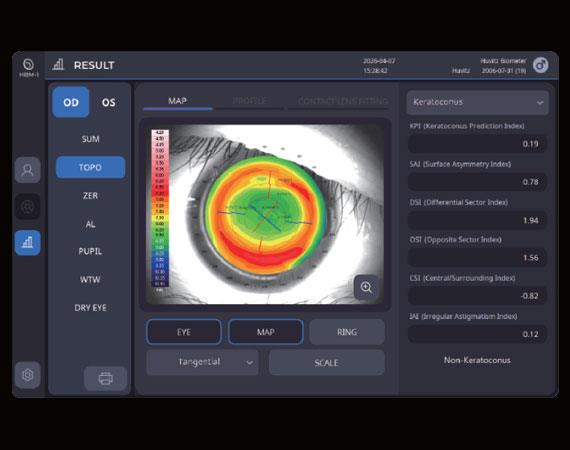
The Huvitz Oracle’s 24-ring Placido topographer captures detailed anterior corneal surface data and presents it through multiple maps. More than 100,000 analyzed points provide a rich foundation for evaluating corneal curvature, power distribution, local irregularity, and aberrations.
Keratoconus Risk Assessment: Corneal parameters are combined into a Keratoconus Prediction Index (KPI) to support screening for cone suspicion and corneal irregularity. The KPI is a risk-assessment aid and should be interpreted alongside additional testing and clinical judgment.
Contact Lens and Ortho-K Fitting: Simulated fluorescein patterns and map-based changes in curvature and eccentricity help assess lens centration, alignment, displacement, and fit across supported hard, soft, and orthokeratology lens designs.
White-to-White Measurement: Automatic corneal diameter measurement provides useful data for contact lens selection and fitting, as well as cataract and refractive surgery planning.
A Complete Dry Eye Workup
Without Another Stop
The Huvitz Oracle combines a standardized symptom questionnaire with six advanced examinations to create a seven-part dry eye assessment. By reviewing subjective symptoms alongside tear film stability, tear quantity, lipid quality, gland structure, blink behavior, and fluorescein imaging, clinicians can build a more complete picture of the factors contributing to ocular surface discomfort.
OSDI Questionnaire: Quantify patient-reported symptoms with the Ocular Surface Disease Index and establish a consistent baseline for consultation and follow-up.
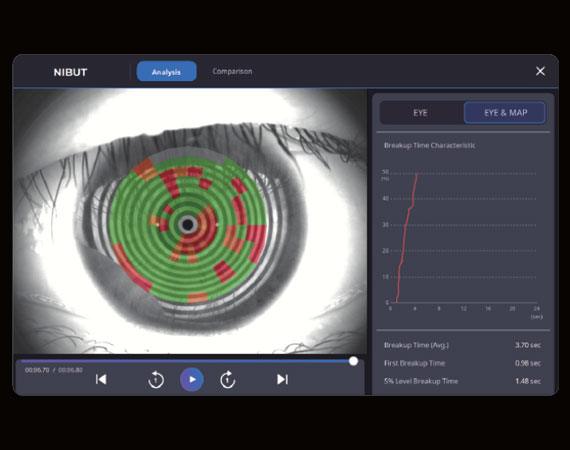
Non-Invasive Tear Breakup Time (NIBUT/NIKBUT): Track when and where the tear film begins to break up, with maps and graphs that make tear film instability easier to quantify and explain.
Lipid Layer Imaging: Capture and record the color and pattern of the tear film’s lipid layer, then compare findings with a four-level reference scale.
Tear Meniscus Height: Measure tear meniscus height to add objective information about tear quantity and support monitoring over time.
Meibography: Visualize and grade meibomian gland loss to support assessment of MGD and evaporative dry eye-related factors.
Blink Analysis: Measure inter-blink intervals to evaluate blink frequency and regularity and support patient counseling around lifestyle-related factors.
Fluorescein Imaging: Use blue LED illumination to observe corneal staining, tear distribution, and tear film stability, including findings before and after contact lens wear.
Designed Around the Way Eye Care Teams Work
From patient positioning to report review, the Huvitz Oracle is built to make advanced testing easier to incorporate into a busy practice.
- 180-degree rotating 10.1-inch touch LCD for flexible viewing and positioning
- Foot switch capture that keeps both hands available during the examination
- Wide headrest designed to accommodate a variety of facial shapes
- Built-in PC for measurement, analysis, and report generation on one screen
- Semi-automatic tracking to support consistent positioning
- DICOM with access through Forum or other image management software
Put the Huvitz Oracle to Work In Your Practice
With a broad range of connected measurements, the Huvitz Oracle can support multiple clinical workflows and service lines:
- Eyeglass Prescriptions: Build from objective Ref/Ker data while considering aberrations, pupil size, and real-world visual quality.
- Contact Lens and Ortho-K: Use corneal maps, white-to-white measurements, pupillometry, and simulated fitting tools to support lens selection and follow-up.
- Keratoconus and Corneal Irregularity Screening: Review corneal shape, Zernike data, keratometry, and KPI-based risk information.
- Dry Eye Evaluation: Connect symptoms with tear quality, quantity, stability, gland status, blink behavior, and fluorescein findings.
- Cataract Evaluation Support: Use pupillometry, retroillumination, white-to-white measurement, and internal aberration analysis to add context to the workup.
- Refractive Surgery Planning and Follow-Up: Bring refraction, corneal topography, pupillometry, and ocular surface information into pre- and post-operative evaluation.